|
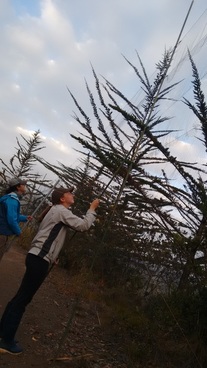
I'm making an energy budget for hummingbirds. What is that, you ask? You know, like you have a financial analyst (if you are rich enough to have money, not if you are a grad student) to budget your money and tell you how much you're spending on what- I do that with hummingbirds' energy use. I measure how much energy hummingbirds use to do things like perch, fly, and keep themselves warm. The idea is to see how this energy budgeting changes with outside temperature and with the energy available to them in their habitats. If there are a lot of flowers available to them to feed on, do they spend more energy because they can, or less because they don't have to search much for food any more? If it gets warmer, do they have to spend so much energy cooling down that they can't go find a mate, or can't defend a territory? Can you guess where this is going? Climate change! As temperatures change, will hummingbirds, and other animals, suffer energetically? Will their energy budgets become so tight that they can't survive? These are some of the questions I'm asking with my dissertation work. Some components of this work include: 1. Measuring the thermoneutral zone (TNZ) of different hummingbird species. Here is a simple sketch of what the TNZ is. A species' TNZ is the range of outside temperatures within which it does not have to spend much energy maintaining its body temperature. At lower and higher temperatures, things start to get more expensive. Have you noticed how you tend to either get thinner when it's a cold winter, or you eat a lot more? That's because your body has to spend more energy keeping itself at normal body temperature. Generating heat is expensive!  2. Recording behavior. This is good old ecology- we spend a lot of time in the field writing down just what hummingbirds do and for how long. It looks something like this: 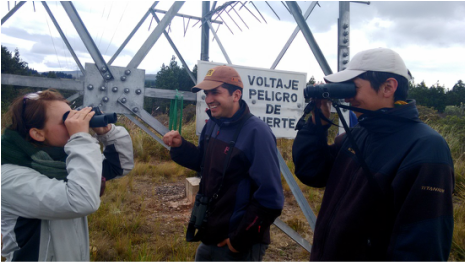 Julisa, Boris, Pedro (Hormiga) Ok, no actually it looks like this: 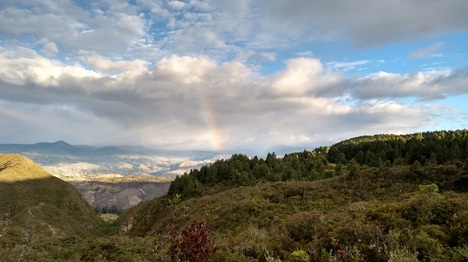 View from a behavior point 3. Putting cameras on flowers. Taking a flower out of Ben's book, we put cameras on flowers we believe are hummingbird visited, to see how often a hummingbird species visits a particular flower species. It's a bit of a struggle putting them up sometimes, but we get some great captures from the cameras.
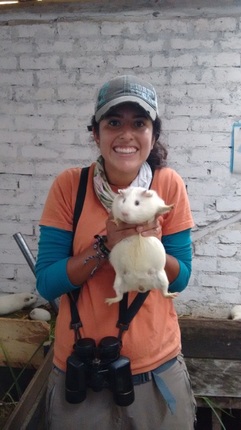
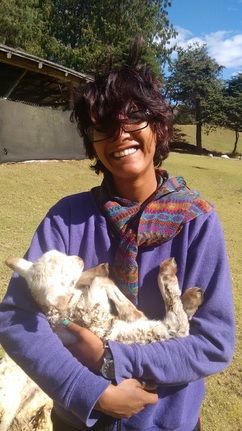
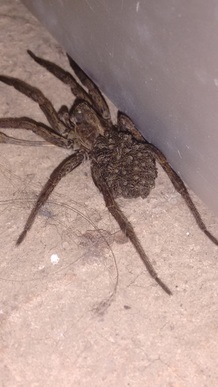
4. We get to interact with random farm animals. The list so far includes- dogs, cat, alpacas, sheep, lambs, guinea pigs. This is, of course, apart from the not-so-tame animals- the birds, spiders and their babies, beetles, praying mantises, bees, lizards, skinks, frogs, and so on.
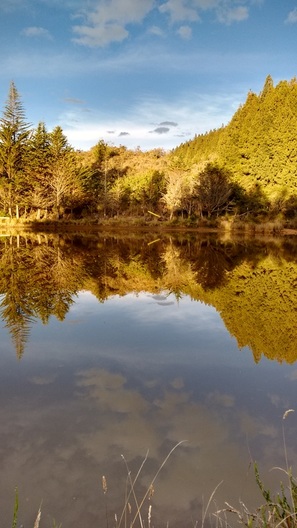
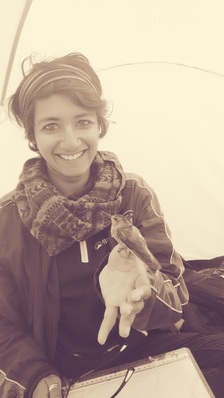
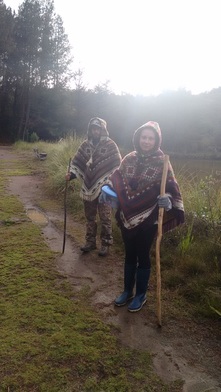
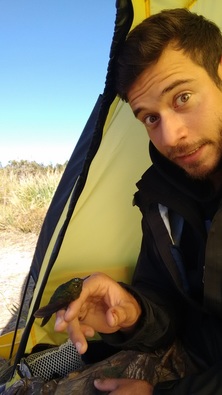
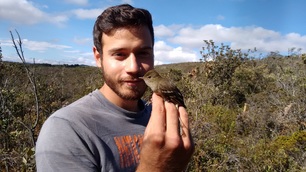
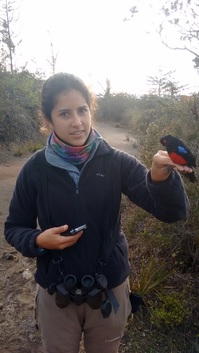
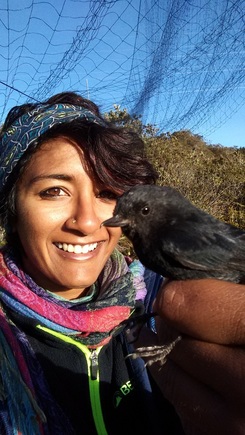
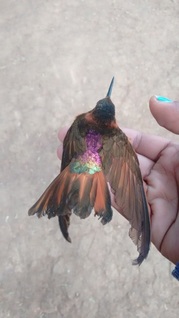
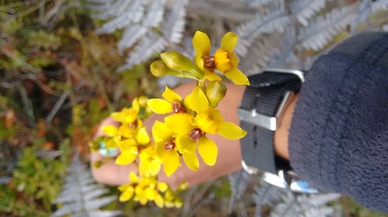
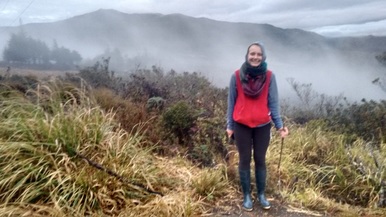
5. We also, incidentally, work with hummingbirds. And get to see other birds up close. Here's some bird photos and other fun photos!
5 Comments
Your comment will be posted after it is approved.
Leave a Reply. |
Anusha ShankarPostdoc, Nat Geo Explorer, hummingbird physiology and ecology. Archives
March 2019
Categories |




 RSS Feed
